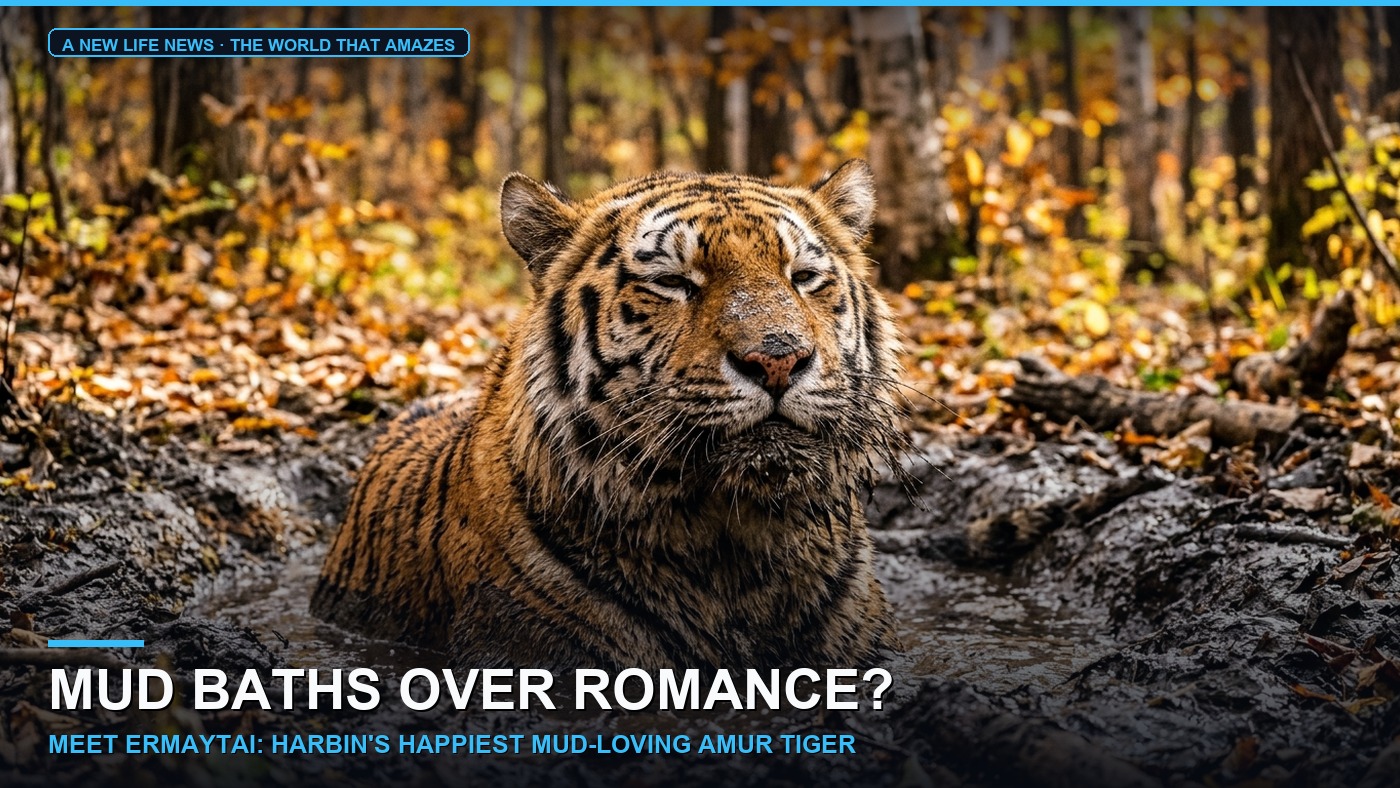
Every friend group has that one confirmed bachelor who would rather spend Saturday afternoon at a spa than dress up for a blind date. In the world of endangered big cats, that title currently belongs to Ermaytai, an eight-year-old Amur (Siberian) tiger living at the Siberian Tiger Park in Harbin, China.
Ermaytai’s story gained widespread media attention on October 29, 2026, thanks to footage showing the 550-pound apex predator coated from whiskers to tail tip in dark, glossy mud. Whenever park staff hose him down to restore his bright orange-and-black coat, Ermaytai waits politely—and then marches straight back into his favorite mud wallow.
The 'Muddy Bachelor' Joke vs. Real Tiger Biology
Commenters on Chinese social media and viral news outlets quickly dubbed Ermaytai the park’s lovable "mud monster," joking that his refusal to stay clean had ruined his romantic prospects with the park’s female tigers.
While the punchline is undeniably funny, it would be inaccurate to claim that Ermaytai is single strictly because of his fondness for mud. In reality, breeding programs for endangered Amur tigers are governed by strict biological factors:
- Genetic Matchmaking: Keepers pair tigers based on studbook genetics to preserve maximum diversity;
- Brief Estrus Windows: Female tigers are receptive for only a few days at a time;
- Solitary Nature: Wild Amur tigers are naturally solitary animals that spend almost the entire year enjoying their own company.

Why Big Cats Actually Love a Good Mud Bath
Far from being a flaw, Ermaytai’s mud obsession is deeply rooted in evolutionary biology. Unlike domestic cats that despise getting their paws wet, tigers are avid swimmers and enthusiastic mud-bathers for three very practical reasons:
- Thermoregulation & Skin Care: Cool mud helps regulate body temperature and forms a soothing barrier against biting flies, ticks, and skin irritation.
- Scent Camouflage: In the wild forests of the Russian Far East and northeast China, rolling in mud masks a predator’s scent while stalking prey.
- Sensory Enrichment: For a well-fed tiger in a sanctuary, splashing through thick mud is pure play. (In fact, keeping big cats entertained is a global craft: on October 31, 2026, keepers at the Leningrad Zoo in St. Petersburg launched a public toy drive to collect heavy-duty plastic jerrycans for their beloved Amur tigress, Agafya.)
How Many Amur Tigers Are Left in the World in 2026?
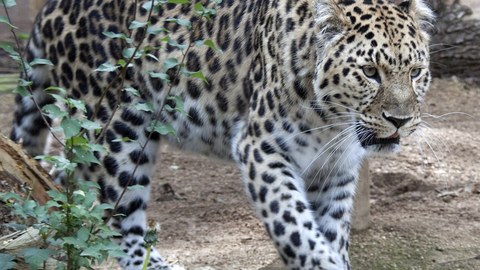
Behind Ermaytai’s comedic mud mask lies a genuine conservation success. In 2026, the wild population of the Amur tiger (Panthera tigris altaica) stands at roughly 750 individuals across the Russo-Chinese borderlands—up from fewer than 50 in the 1940s. Alongside their neighbors featured in our report on the Amur leopard population in 2026 (~130 wild leopards), the great cats of the Far East are thriving—and as Ermaytai proves, they are doing it entirely on their own terms.