If anyone still doubts whether rescuing a single orphaned animal can change the ecological destiny of an entire national park, a two-ton matriarch named Ganga has a compelling counterargument—one wrapped in prehistoric-looking folds of armor and grazing peacefully in the foothills of the Eastern Himalayas.
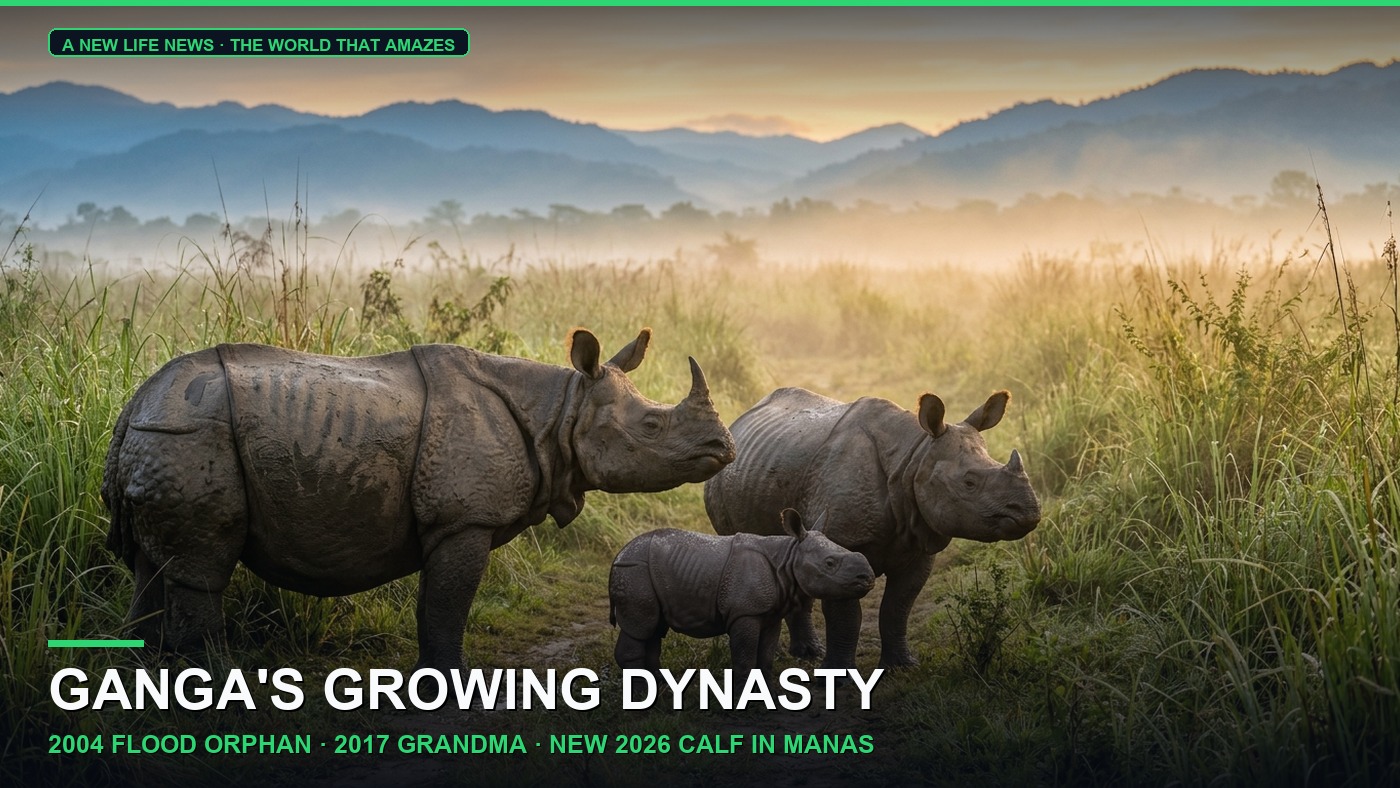
On October 31, 2026, forestry officials in Assam, India, and conservationists from the Wildlife Trust of India (WTI) confirmed heartwarming news from Manas National Park: Ganga’s multi-generational wild family has grown once again. Her second-born daughter, tracked by rangers as Ganga-Ka, was spotted with a healthy newborn calf by her side in the tall elephant grass.
From 2004 Flood Orphan to Park Matriarch
To appreciate why field biologists are celebrating this birth, you have to rewind twenty-two years. In July 2004, catastrophic monsoon floods swept through Kaziranga National Park, separating a tiny two-month-old greater one-horned rhinoceros (Rhinoceros unicornis) from her mother. Rescued weak and stranded by the Centre for Wildlife Rehabilitation and Conservation (CWRC), she was bottle-fed back to health and named Ganga.
In February 2007, Ganga and another hand-reared female named Jamuna were translocated to Manas National Park, a UNESCO World Heritage site where decades of civil unrest and poaching had wiped out the entire local rhino population in the 1990s. Skeptics wondered whether hand-reared orphans could ever adapt to predators, seasonal floods, and wild breeding.

Not Her First Grandchild—An Expanding Wild Dynasty
Ganga answered the skeptics by founding a dynasty. She gave birth to her first wild calf in 2013, and as documented by The Indian Express on November 18, 2017, her first-born daughter delivered a calf of her own—officially making Ganga India’s first rehabilitated wild rhino to become a grandmother.
That historical context makes the October 2026 arrival even more meaningful. Rather than a one-time stroke of luck, the new calf born to her younger daughter Ganga-Ka proves that Ganga’s lineage is expanding across multiple branches and generations, anchoring the genetic recovery of an entire ecosystem.
How Many Greater One-Horned Rhinos Are Left in the World in 2026?
Ganga’s family album mirrors one of the greatest conservation turnarounds on Earth. At the turn of the 20th century, relentless hunting had reduced the greater one-horned rhino to fewer than 200 individuals worldwide.
- Global Population in 2026: More than 4,000 greater one-horned rhinos now roam protected alluvial grasslands across northeastern India and southern Nepal.
- Manas National Park Recovery: From zero rhinos in the late 1990s, Manas now supports a thriving herd of 50+ wild rhinos, with roughly a quarter of the park’s population descended directly from rehabilitated flood orphans.
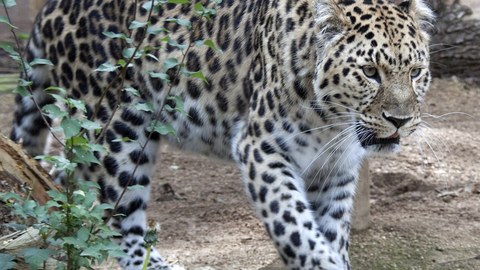
Much like the remarkable rebound we documented in our report on the Amur leopard population in 2026—which climbed from roughly 30 cats to around 130 in the wild—Ganga’s growing family in Assam proves that when conservationists combine habitat protection with patient rehabilitation, nature pays back the investment across generations.