
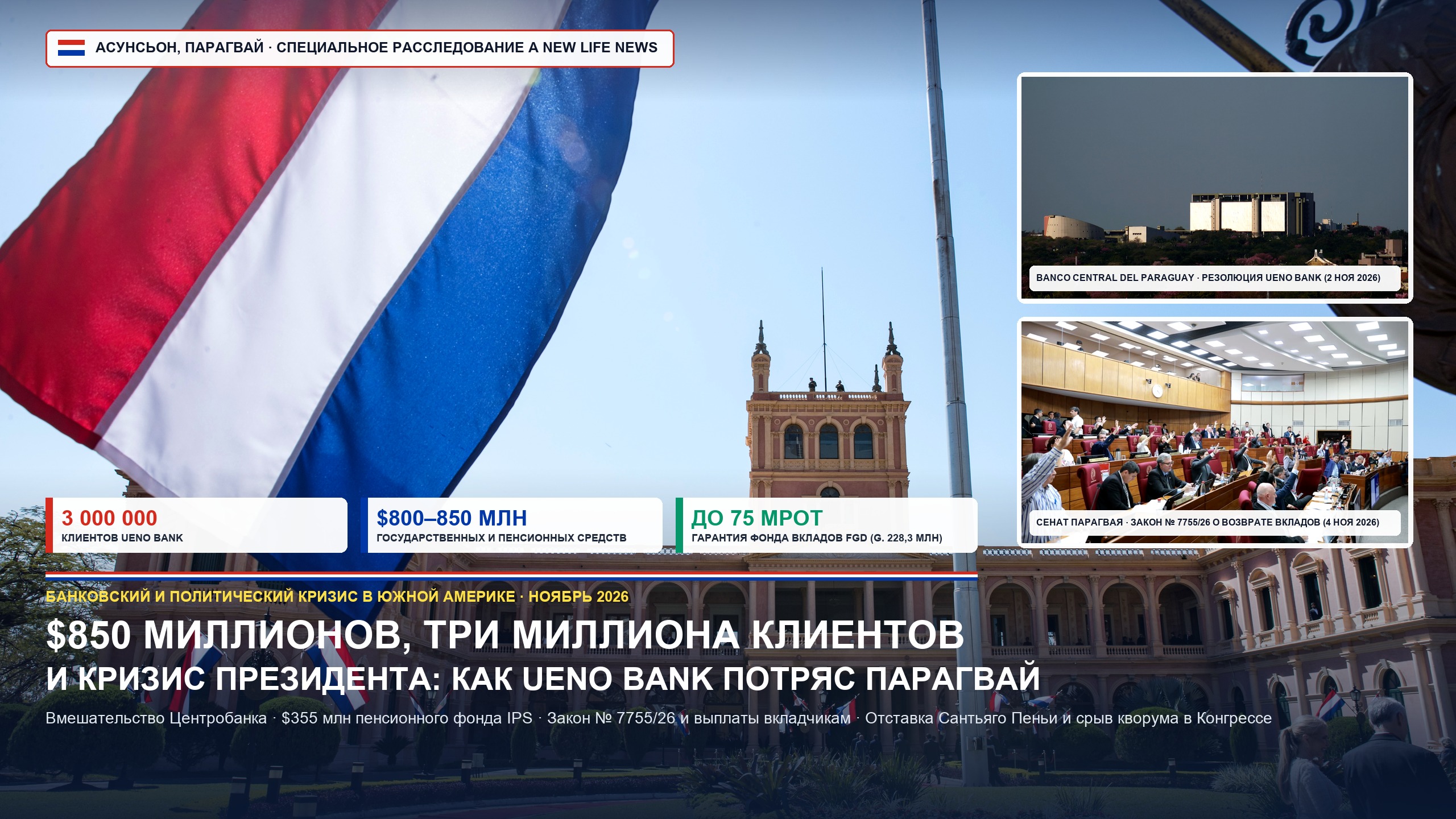
A NEW LIFE News documentary investigation tracing the November 2–3, 2026 Central Bank of Paraguay (BCP) resolution of Ueno Bank under Law No. 2.334/03, the $800M–$850M in public and IPS pension funds ($355M—and why placed deposits are distinct from final losses), President Santiago Peña's resignation crisis, the Senate's unanimous passage of Law No. 7755/26, and the November 5 launch of Deposit Guarantee Fund (FGD) payouts.
In the first week of November 2026, South America witnessed a financial and constitutional chain reaction that few thought possible in one of the region's most macroeconomically stable republics. Within 96 hours, a regulatory intervention at Paraguay's largest retail lender by customer count—Ueno Bank S.A.—escalated from a central bank audit into mass street demonstrations, an emergency unanimous vote in the Senate, and a presidency-shaking crisis around President Santiago Peña.
A NEW LIFE News examined official communiqués from the Central Bank of Paraguay (Banco Central del Paraguay, BCP), the legislative record of emergency Law No. 7755/26 enacted by the Paraguayan Senate on November 4, investment disclosures from the Instituto de Previsión Social (IPS) pension fund, and primary broadcasts from Telefuturo, NPY, ABC TV, Reuters, and EFE to separate panic from verified financial fact.
Chapter I. The Day the Bank Stopped Being a Bank
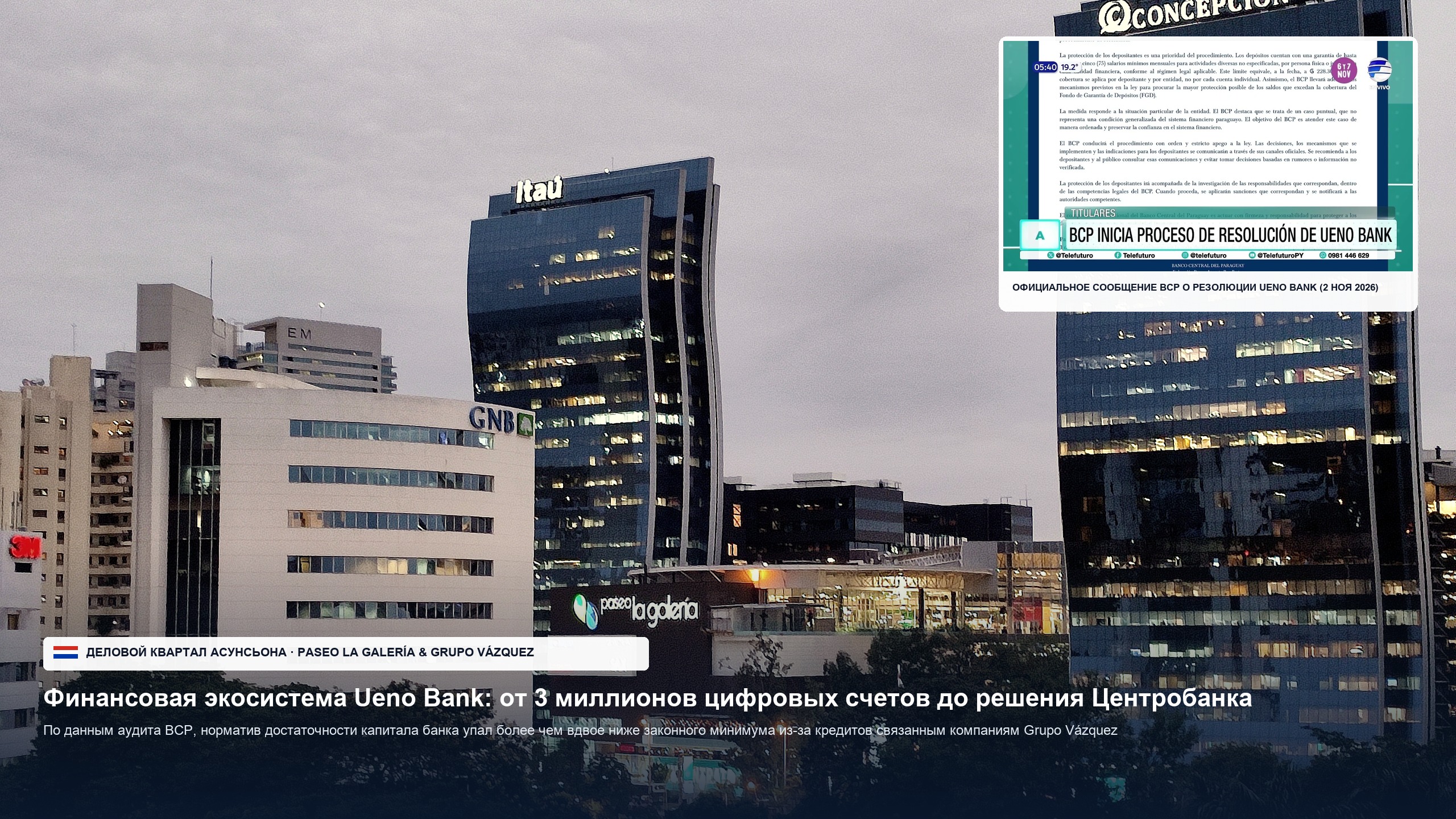
Late on November 2, 2026, the Board of Directors of the Central Bank of Paraguay (BCP) unanimously triggered a formal bank resolution procedure (proceso de resolución) for Ueno Bank under Law No. 2.334/03 on Deposit Guarantees and Resolution of Financial Entities.
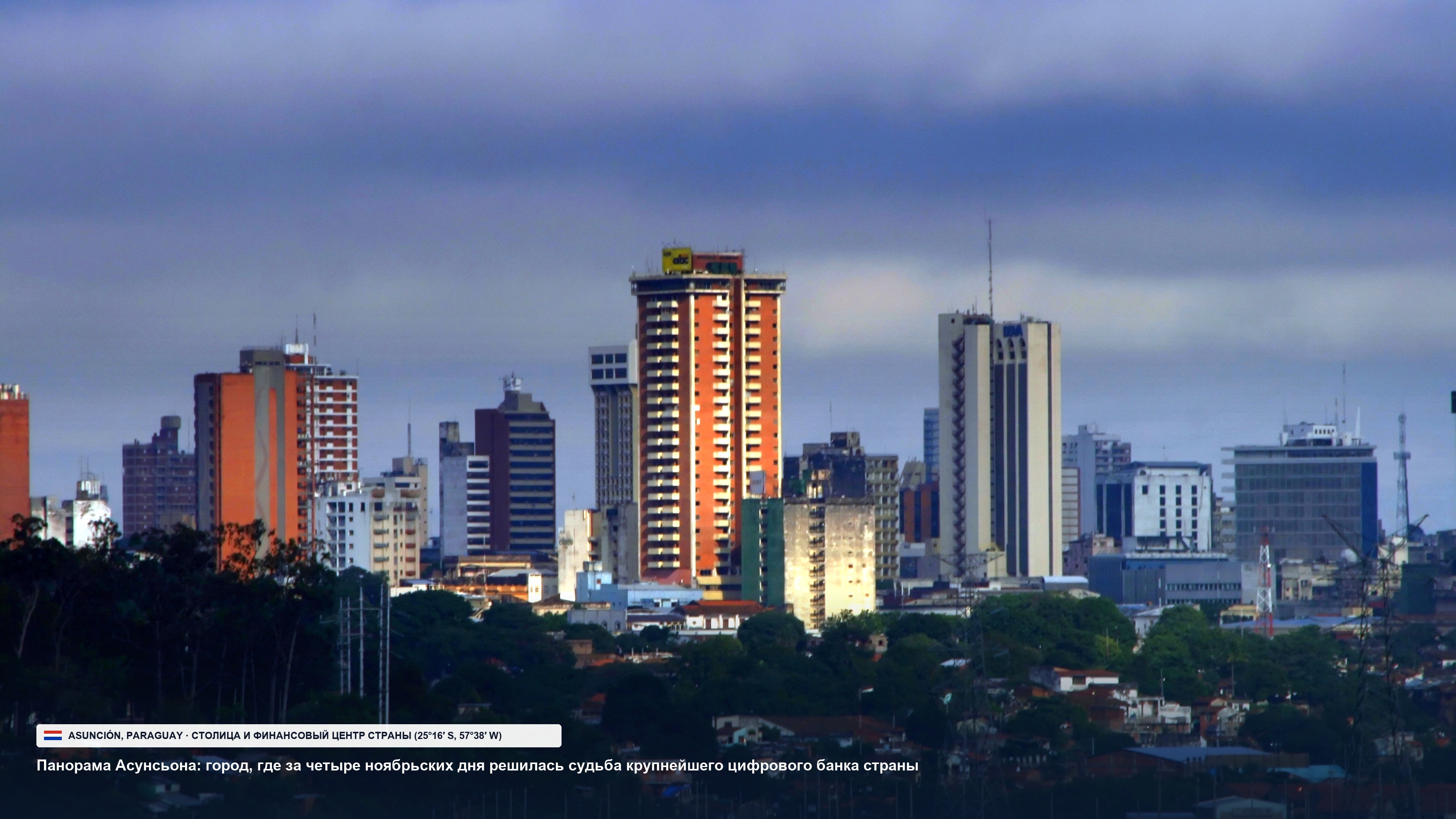
To grasp the scale of the shock, consider Paraguay's demographics. In a nation of roughly 6.5 million people, Ueno Bank held accounts for approximately 3 million individual and corporate customers. Having expanded rapidly from a digital fintech challenger and absorbed the traditional lender Visión Banco, Ueno had become the daily payment rail of Paraguayan life—powering supermarket QR payments, family remittances, civil-service payrolls, and small-business working capital.
On the morning of November 3, 2026, Ueno Bank branches kept their shutters down while mobile apps and debit cards froze nationwide. According to Central Bank audit findings, Ueno Bank's capital adequacy (solvency) ratio had plunged to less than half the statutory minimum. Examiners traced the capital deficit to heavy related-party lending directed toward companies affiliated with the bank's controlling conglomerate, Grupo Vázquez. Hours after the intervention was announced, Central Bank Governor Carlos Carvallo tendered his resignation.
Chapter II. Where Did Hundreds of Millions in Public Dollars Come From?
Had the freeze involved only small retail balances, the crisis might have remained a technical central bank operation. What turned a banking failure into a national political explosion was the revelation of who else had parked money inside Ueno Bank: over the preceding two years, between $800 million and $850 million in state and public-sector funds had been placed into the private lender.
The single largest and most politically explosive exposure belonged to the Instituto de Previsión Social (IPS)—Paraguay's national social security and pension fund—which held approximately $355 million in Ueno Bank deposit certificates (CDAs) and accounts, representing nearly 9% of the pension system's entire investment portfolio. The remaining $445M–$495M consisted of deposits from state-owned enterprises, ministries, and public payroll accounts.
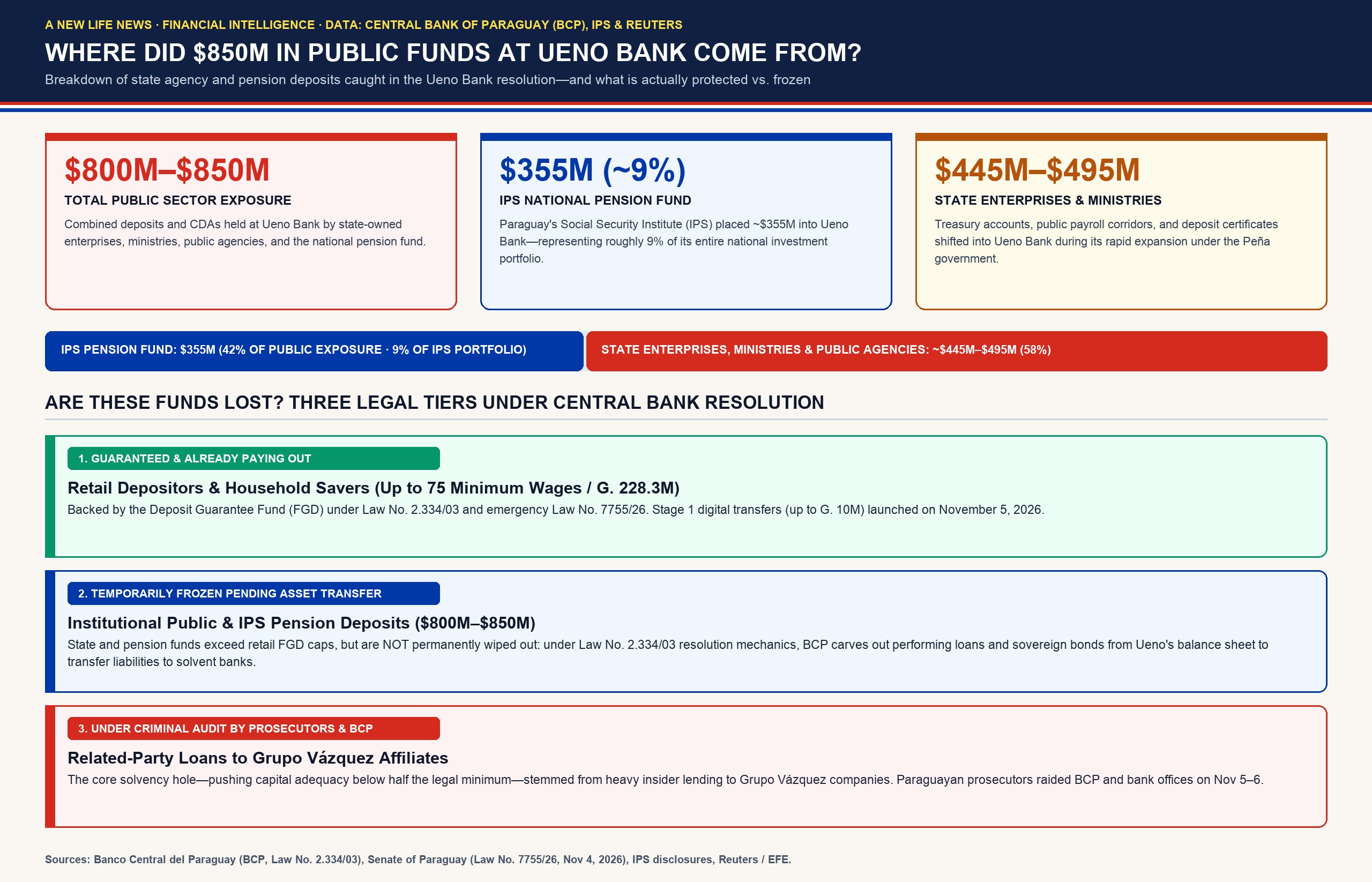
Here, rigorous financial journalism requires drawing a clear distinction: the $800M–$850M in state and pension deposits is NOT permanently lost or wiped out. Because institutional state deposits exceed the per-client cap of the retail Deposit Guarantee Fund (FGD), they are temporarily frozen during resolution. However, under Article 18 of Law No. 2.334/03, the Central Bank's resolution mechanism carves out Ueno Bank's performing loan book, sovereign bonds, and liquid reserves to transfer them—together with institutional liabilities—to solvent commercial banks. Meanwhile, the related-party loans granted to Grupo Vázquez affiliates are now under formal criminal investigation by Paraguay's Public Ministry (Fiscalía), whose prosecutors raided BCP headquarters and bank offices on November 5–6.
Chapter III. How a Banking Crisis Reached the President
Why did a single private bank accumulate $850 million in public and pension money? That question led straight to the Palacio de los López. President Santiago Peña—himself a former Central Bank economist and Finance Minister—held documented historical business and shareholder ties to Grupo Vázquez prior to divesting his stake under public scrutiny in early 2025. Critics and opposition lawmakers charged that throughout Peña's administration, state agencies and the IPS pension fund were systematically steered toward Ueno Bank.
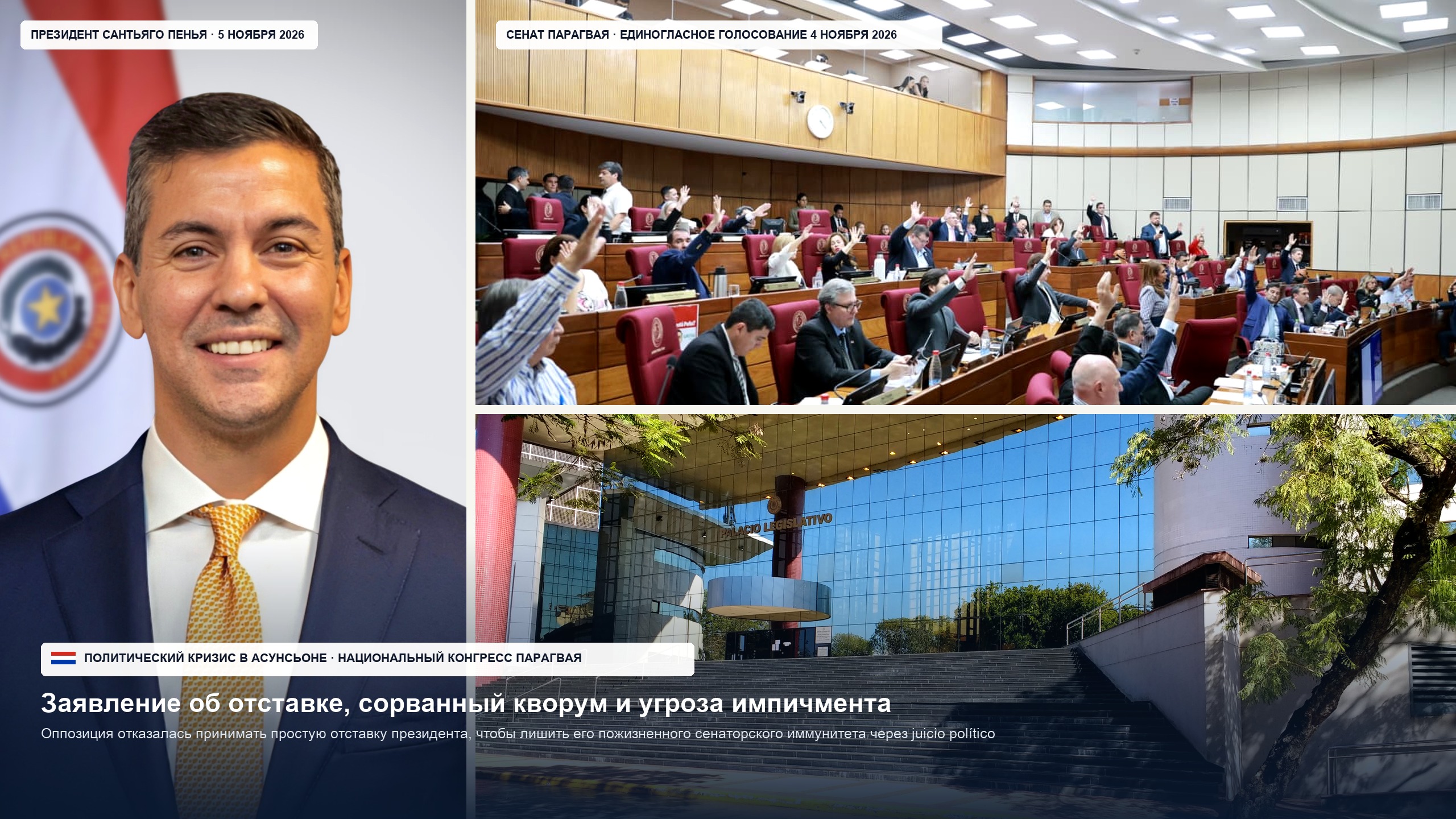
Between November 4 and November 5, the political crisis unfolded at breathtaking speed:
- Unanimous Impeachment Vote in the Lower House: Paraguay's Chamber of Deputies voted unanimously to advance impeachment proceedings (juicio político) against President Peña over alleged malfeasance and conflicts of interest in the placement of public and IPS pension funds.
- Peña Announces His Resignation (November 5): Seeking to preempt a Senate impeachment trial, Peña released a video address on November 5 announcing his resignation from the presidency.
- The Quorum Walkout Paradox: That afternoon, a joint bicameral session of Congress convened to vote on Peña's resignation letter—only for the session to collapse for lack of quorum. Under Paraguay's Constitution, a president whose voluntary resignation is accepted by Congress automatically becomes a lifetime senator (senador vitalicio) with parliamentary immunity from prosecution. Opposition lawmakers refused to accept his resignation, insisting on removing him via juicio político in the Senate to strip his immunity, while ruling Colorado Party legislators walked out of the chamber, leaving the presidency in an unprecedented constitutional standoff.
Chapter IV. Citizens and Bank Workers Demand Their Money
While lawmakers battled over constitutional immunity inside Congress, thousands of Paraguayan citizens gathered outside shuttered Ueno branches and in front of the Central Bank of Paraguay's headquarters in Asunción.
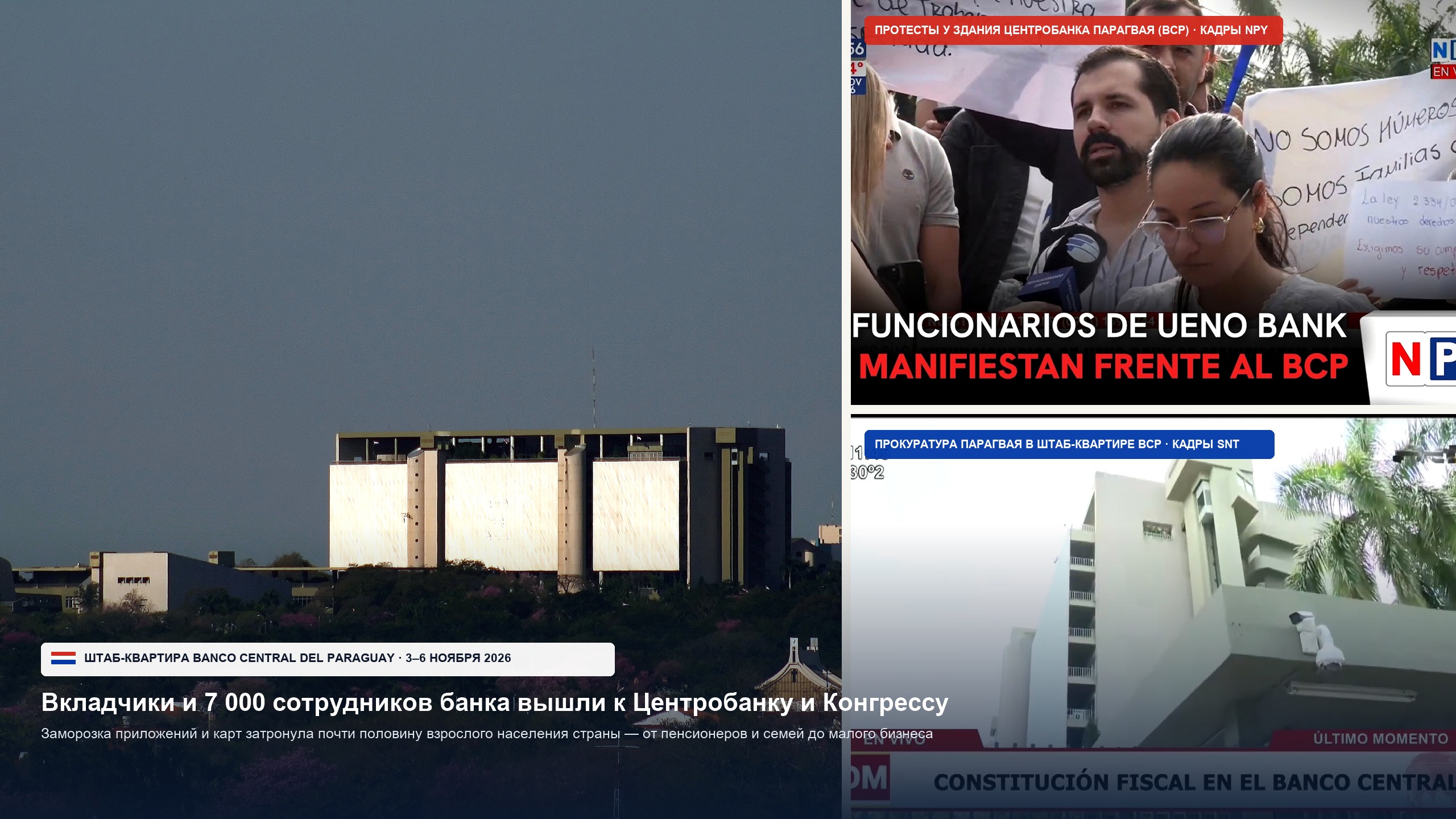
Two distinct groups joined forces outside the Central Bank gates: household savers, retirees, and small shopkeepers whose working capital was frozen right at the start of the monthly billing cycle; and nearly 7,000 Ueno Bank and conglomerate employees marching with banners reading "No somos números, somos familias" ("We are not numbers, we are families"), demanding job protection and full adherence to Law No. 2.334/03.
Chapter V. The State Promises to Return Deposits: What Is Guaranteed and What Is Paying Out Now
To prevent a systemic bank run, Paraguayan authorities deployed both an emergency parliamentary statute and an immediate Central Bank payout schedule:
1. Unanimous Emergency Law No. 7755/26 (November 4, 2026): At 16:42 on November 4, an extraordinary session of the Senate of Paraguay chaired by Sen. Basilio Núñez—with key floor interventions by Budget Chair Sen. Silvio Ovelar and Sen. Dionisio Amarilla—unanimously sanctioned Law No. 7755/26 amending Article 1(c) of Law No. 2.334/03. The law establishes an emergency fast-track advance of up to 40 monthly minimum wages (~G. 121.7 million / ~$15,500) payable within 24 hours to 5 business days, explicitly protecting:
- 1,400,000 depositors who hold an active account at another Paraguayan bank or financial institution (eligible for direct electronic interbank transfer);
- 400,000 citizens who banked exclusively with Ueno Bank (eligible for payout through designated agent banks using their national ID, or Cédula).
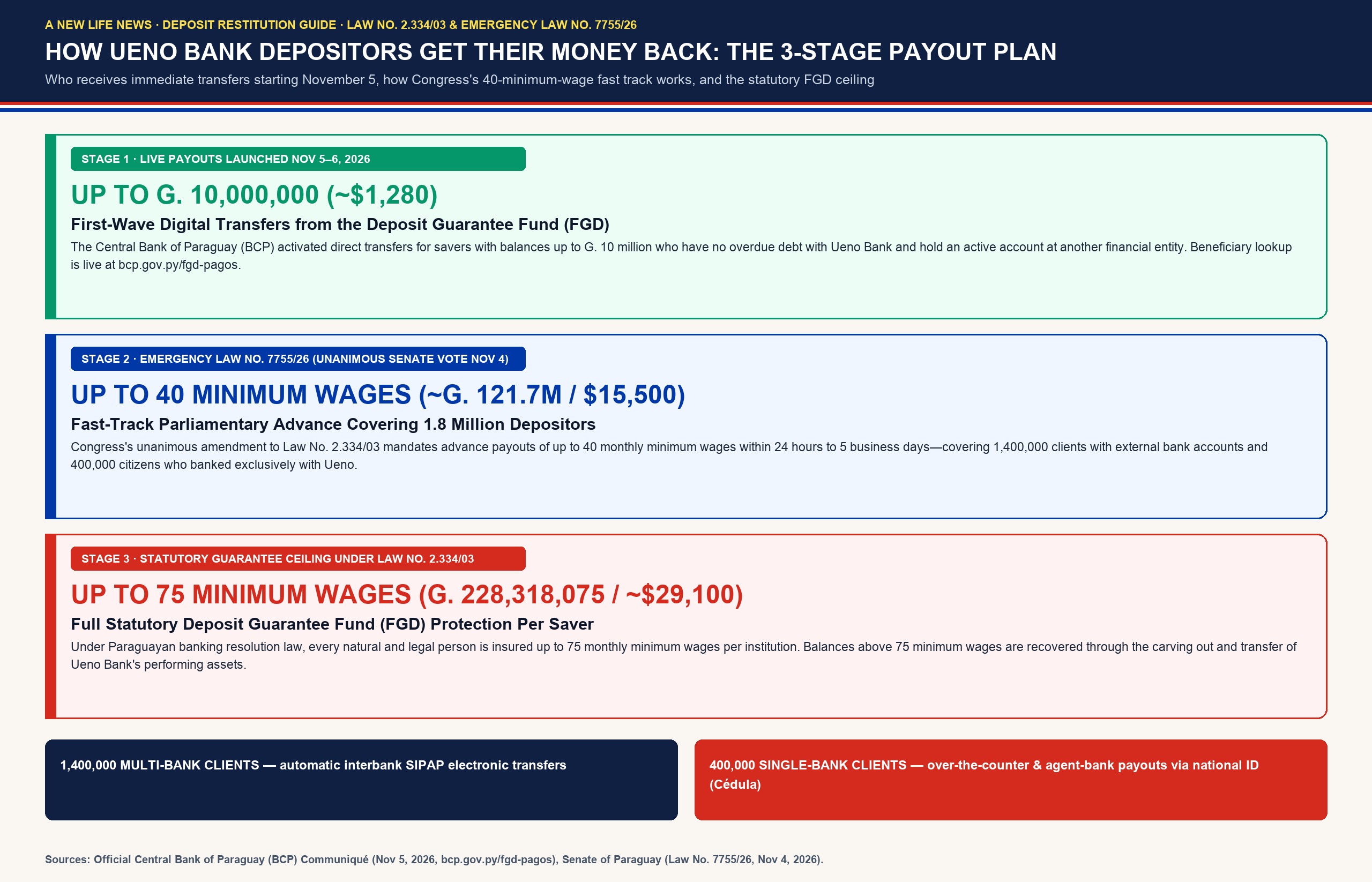
2. Stage 1 Central Bank Payouts Launched November 5–6: On November 5, the Central Bank of Paraguay (BCP) activated Stage 1 payouts from the Deposit Guarantee Fund (FGD) and published beneficiary verification portals at www.bcp.gov.py/fgd-pagos, www.bcp.gov.py/consultas-fgd, and www.bcp.gov.py/consultas2-fgd. Immediate electronic transfers began for savers meeting three criteria:
- Total deposit balance of up to G. 10,000,000 (~$1,280);
- No overdue credit debt owed to Ueno Bank;
- An active account at another bank or financial entity in Paraguay.
Across all stages, every natural and legal person remains protected up to the full statutory FGD ceiling under Law No. 2.334/03: 75 monthly minimum wages, equal to G. 228,318,075 (~$29,100) per depositor. Balances exceeding 75 minimum wages are recovered as the Central Bank carves out and transfers Ueno Bank's performing assets to healthy institutions.
Chapter VI. Could This Happen in Other South American Countries?
The shockwaves from Asunción quickly rippled across Mercosur currency and bond desks, sending the Paraguayan Guaraní down roughly 5% against the U.S. dollar in early November and prompting regional regulators to scrutinize how state enterprises and pension funds allocate their cash reserves.
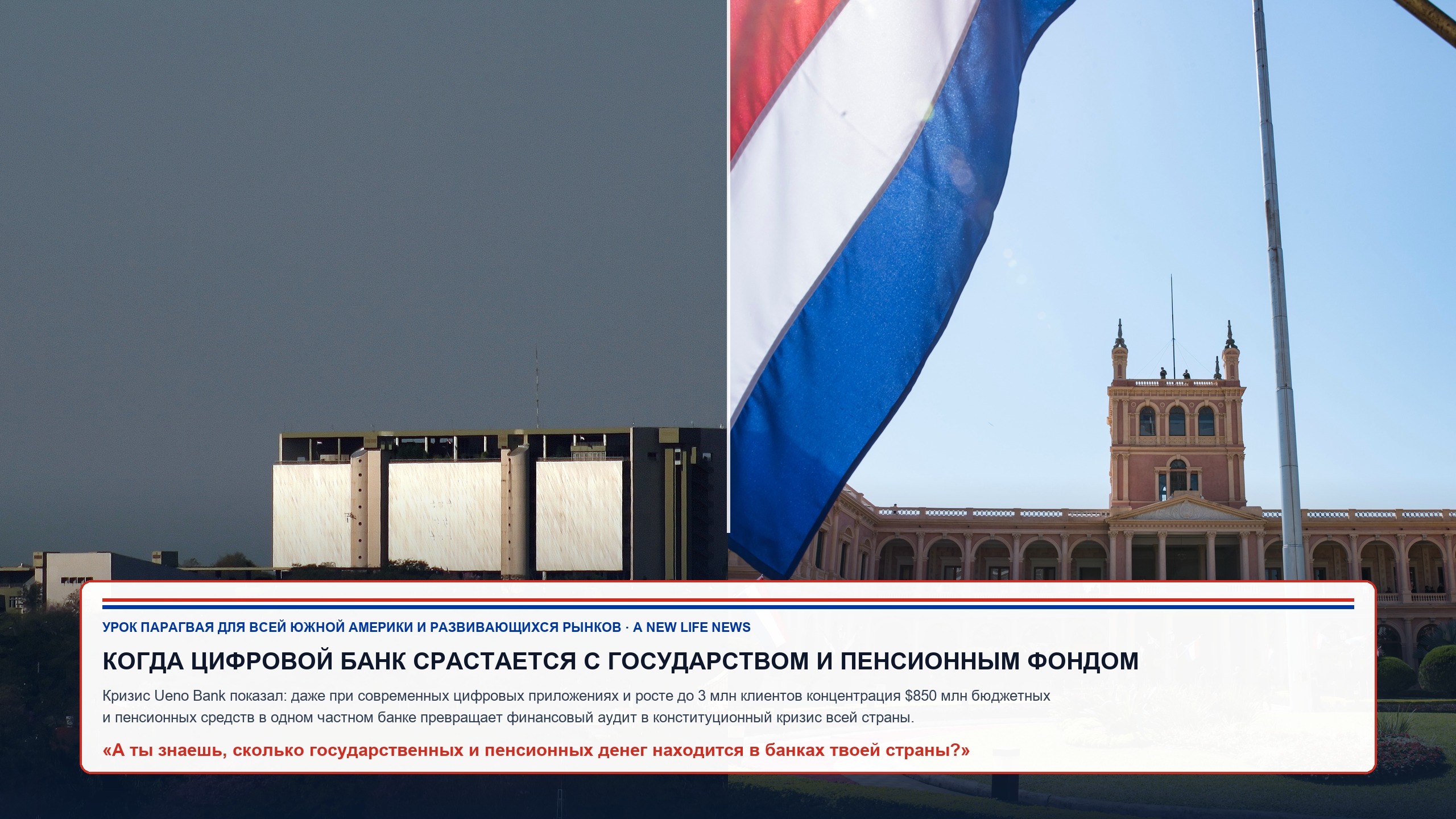
The Ueno Bank crisis exposes a structural vulnerability shared across emerging markets. Digital banking brought millions of unbanked citizens into the formal economy in record time. Yet when a single private financial group simultaneously captures nearly half a country's adult population, absorbs $850 million in public and pension deposits, and extends credit to its own conglomerate affiliates, the boundary between private balance sheets and sovereign stability disappears.
"Do you know how much public and pension money sits inside the banks of your country?"